|
 |
|
Your dog gives you a lifetime of unconditional love, loyalty, and friendship. In return, she counts on you to provide her with food, water, safe shelter, regular veterinary care, exercise, companionship, and more. Take care of these ten essentials, and you'll be guaranteed to develop a rewarding relationship with your canine companion.
- Outfit your dog with a collar and ID tag that includes your name,
address, and telephone number. No matter how careful you are, there's
a chance your companion may become lost—an ID tag greatly increases the chance
that your pet will be returned home safely.
- Follow local laws for licensing your dog and vaccinating him for
rabies. Check with your local shelter or humane society for information
regarding legal requirements, where to obtain tags, and where to have your pet
vaccinated.
- Follow this simple rule—off property, on leash.
Even a dog with a valid license, rabies tag, and ID tag should not be allowed
to roam outside of your home or fenced yard. It is best for you, your community,
and your dog to keep your pet under control at all times.
- Give your dog proper shelter. A fenced yard with a doghouse
is a bonus, especially for large and active dogs; however, dogs should never
be left outside alone or for extended periods of time. Dogs need and crave companionship
and should spend most of their time inside with their family.
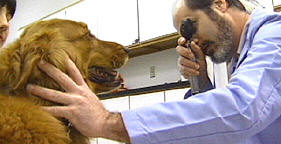
- Take your dog to the veterinarian for regular check-ups.
If you do not have a veterinarian, ask your local animal shelter or a pet-owning
friend for a referral.
- Spay or neuter your dog. Dogs who have this routine surgery
tend to live longer, be healthier, and have fewer behavior problems (e.g., biting,
running away). By spaying or neutering your dog, you are also doing your part
to reduce the problem of pet overpopulation.
- Give your pooch a nutritionally balanced diet, including constant
access to fresh water. Ask your veterinarian for advice on what and
how often to feed your pet.
- Enroll your dog in a training class. Positive training
will allow you to control your companion's behavior safely and humanely, and
the experience offers a terrific opportunity to enhance the bond you share with
your dog.
- Give your dog enough exercise to keep him physically fit (but not
exhausted). Most dog owners find that playing with their canine companion,
along with walking him twice a day, provides sufficient exercise. If you have
questions about the level of exercise appropriate for your dog, consult your
veterinarian.
- Be loyal to and patient with your faithful companion. Make
sure the expectations you have of your dog are reasonable and remember that
the vast majority of behavior problems can be solved. If you are struggling
with your pet's behavior, contact your veterinarian or local animal shelter
for advice, and check out The HSUS's Pets for Life campaign information.
Related Articles:
 Dog Eye Care Dog Eye Care
How to Keep a Dog Young Forever
Winter Skin and Paw Care in Dogs
How Clean Up Your Dogs Waste
Taking Care of Dog Ears
|